Curriculum
I work across the boundary between AI research and applied engineering — designing ML architectures, building evaluation workflows, and translating model capabilities into systems that hold up under real product constraints. My work spans deep learning, signal processing, real-time audio enhancement, multimodal modelling, and applied research systems. Download CV
Professional Experience
- Designed and implemented low-latency deep learning pipelines for real-time audio denoising.
- Owned signal preprocessing, model architecture, and evaluation workflows against production-grade latency and reliability constraints.
- Delivered applied research, model architecture design, and evaluation methodology for audio-industry clients independently of the Iris engagement.
- Co-inventor on a deep-learning-based patent family filed in the US, UK, WO, CN, and EP (US 2024/0290337 A1; GB 2612621A; WO 2023/079456; CN 2022/80087786.8; EP 4427221 A1).
- Built a music-space exploration system using parametric t-SNE for dimensionality reduction, preserving structure from a high-dimensional song-feature space in its 2D projection.
- Shipped a browser-based GUI for exploring a 20,000-song space and generating playlists interactively, built for online music streaming providers.
Research Activity
Thesis: Emotions in Music — How Naturalistic Music Listening Encodes Acoustic and Emotional Features in the Brain and Is Shaped by Extra-Musical Context.
- Developed NaPuCco, a non-parametric combination framework for one-sample, unsigned fMRI statistics, preserving idiographic voxel-wise encoding at the group level; validated by simulation for false-positive control and power.
- Built BOSS (Brain Orchestra Synchronization Study), a searchlight-based canonical correlation analysis toolbox disentangling acoustic vs. emotional contributions to functional connectivity.
- Ran a behavioral study using LLM-generated, affectively manipulated program notes to test how contextual framing biases emotion ratings during naturalistic symphonic listening.
Thesis: A New Methodology for Modelling Urban Soundscapes.
- Conducted a psychometric revisitation of the ISO/TS 12913-2 soundscape standard across 984 urban soundscape assessments.
- Developed a Bayesian neural network for individual-level response prediction, correcting for non-equidistant interpretation of Likert-scale metrics.
- The Journal of the Acoustical Society of America (JASA), Acoustical Society of America
- European Physical Journal, Springer
- Neurocomputing, Elsevier
- Quality and Quantity, Springer Science+Business Media
- Building Simulation Journal, Springer
Visiting Positions & Research Collaborations
Auditory Cognitive Neuroscience Laboratory (Dr. Robert Zatorre). Contributed to an EEG and TMS study of music perception and cognition.
Trained SVM-based classification and regression models to detect vibrato and predict amplitude/frequency in violin performances from score-derived descriptors; deployed as a real-time didactic Android application.
Academic Background
Conferences and Workshops
- Organization for Human Brain Mapping 2026 (OHBM26)* June 14 to 19, 2025 Bordeaux
- Git and Github Tutorial and Workshop at BrainHack Lucca 2025* December 2 to 5, 2025 Lucca
- BrainHack Lucca 2025 (BHL25)* December 2 to 5, 2025 Lucca
- Git and Github Tutorial and Workshop at BrainHack Lucca 2024* December 2 to 5, 2024 Lucca
- BrainHack Lucca 2024 (BHL24)* December 2 to 5, 2024 Lucca
- Audio Mostly (AUDIOMOSTLY 2024) September 18 to 20, 2024 Milan
- Organization for Human Brain Mapping 2024 (OHBM24) July 23 to 27, 2024 Seoul
- Società Italiana di Psicofisiologia e Neuroscienze Cognitive (SIPF) November 9 to 11, 2023 Siena
- International Conference on Acoustics, Speech, and Signal Processing (ICASSP) May 4 to 8, 2020 Barcelona
- International Congress on Acoustics (ICA2019) September 9 to 13, 2019 Aachen
- Machine Learning for Acoustics Summer School (UKANSS19) August 5 to 9, 2019 Gregynog Hall, Tregynon
- Soundscape Workshop (IOA) June 25, 2019 London
- Sound and Music Computing Conference (SMC Conference) July 4 to 7, 2018 Limassol
- International Workshop on Machine Learning and Music (MML) October 6, 2017 Barcelona
- New Interfaces for Musical Expression (NIME) May 15 to 19, 2017 Copenhagen
- Sound and Music Computing Summer School August 26 to 30, 2016 Hamburg
Prizes and Awards
- IMT Lucca - Fully funded PhD scholarship in Cognitive, Computational and Social Neuroscience
- UKAN Acoustics Network Summer School Grant
- Pounds 500,00 Young Scientist Conference Attendance Award
- Studentship in urban sound environment, EU ERC.
- Awarded grant of DKK 6.963,00 by OTTO MØNSTEDS FOND.
Technical Knowledge
Programming Languages:
Java, Python, Matlab, Unix, basic knowledge of C++ and PHP
Libraries:
Keras, TensorFlow, Pytorch, Pytorch Lightning
Protocols:
OpenSoundsControl (OSC) and TCP/IP
Databases:
basic knowledge of SQL and MySQL
Tools:
Claude Code, MCP, Agentic Engineering, Git & GitHub, GoogleCloud, PureData, LaTeX and basic knowledge of PhP
Language Skills
Italian: Native language; English: C1 (7.5 IELTS, October 2018); Spanish: B\'asico
Projects
Applied ML system design · AI product discovery · Model evaluation · Real-time ML pipelines · Multimodal data · Audio AI · LLM-assisted workflows · Technical mentoring · Research-to-product translation · Cross-functional communication
Co-inventor on a deep-learning-based patent family with filings in the US, UK, WO, CN, and EP: US 2024/0290337 A1; GB 2612621A; WO 2023/079456; CN 2022/80087786.8; EP 4427221 A1.
Past and Ongoing Collaborations
EEG multisensory integration project
IMT Lucca — with Martina Battista, SEED lab.
TMS/EEG data acquisition project
The Neuro, McGill, Montreal — with Giorgio Lazzari, MusiCognition Lab, Università di Pavia.
NeuroInfer: software for automated reverse inference
IMT Lucca — with Davide Coraci, MIND lab.
NeuroInfer has been developed for neuroscientists who want to reliably infer which cognitive processes underlie observed brain activation patterns, by combining a Python-based Bayesian analysis engine with an accessible JavaScript interface for large-scale reverse inference studies.
Research at the Social and Affective Neuroscience Group (SANE)
Emotions in Music: How Naturalistic Music Listening Encodes Acoustic and Emotional Features in the Brain and Is Shaped by Extra-Musical Context
IMT Lucca
Reviews theoretical and empirical work on music emotion, predictive coding, and neuroimaging to motivate a multi-level framework — encoding, connectivity, and context — around naturalistic, extended musical stimuli.
NaPuCco: Non-Parametric Combination for Group-Level Inference
IMT Lucca — GitHub Repo
A non-parametric combination framework for one-sample, unsigned fMRI statistics that preserves idiographic voxel-wise encoding patterns at the group level.
Music and Emotion in Functional Connectivity
IMT Lucca — GitHub Repo
Presents BOSS, a searchlight-based canonical correlation analysis toolbox disentangling acoustic and emotional contributions to functional connectivity during naturalistic music listening.
A Listening Behavioural Study With Contextual Information Manipulation
IMT Lucca — website
Uses LLM-generated program-note descriptions with varying affective valence to test how contextual framing biases emotional response during naturalistic symphonic listening.
Segmentation and analysis of face expressions during naturalistic affective stimuli
Audio Enhancement - real time
Audio quality enhancement
Low-latency deep learning pipelines for real-time audio enhancement, covering preprocessing, model architecture, evaluation workflows, and deployment-oriented constraints — relevant to AI product development where latency, reliability, and user-facing quality matter.
Real time audio denoising
Low-latency deep learning pipelines for real-time audio denoising, covering preprocessing, model architecture, and evaluation workflows.
Urban Soundscape index modelling
Bayesian-NN for individual soundscape assessment predictions and a perceptual index design, development, evaluation
Implements a Bayesian modelling approach to capture the uncertainty surfaced by the psychometric revisitation of the current ISO soundscape standard, extending it into an individual-level predictive index.
Psychometric revisitation of ISO protocol for soundscape measuring and data collection protocol design
University College London, London — Psychometric revisitation of ISO protocol · Data collection protocol design
Identifies systematic non-equidistant interpretation of Likert scale metrics across 984 soundscape assessments in London and introduces a metric-correction procedure, validated via improved prediction of soundscape responses from acoustic parameters.
Music recommendation system
Parametric t-SNE (ANN) for music recommendation system, playlist generation and browser GUI for online music streaming providers
Aalborg University, Copenhagen — VIMEO
Uses parametric t-SNE dimensionality reduction to build a browser-based music-space exploration and playlist-generation tool across a corpus of 20,000 songs.
Deep Learning for Music
Violin Vibrato modelling (SVM) and GUI on android rendering with real time pitch detection
MTG, Universitat Pompeu Fabra, Barcelona — paper · VIMEO
Trains SVM models on score-derived descriptors to classify vibrato and predict its amplitude and frequency in violin performances, deployed as a real-time didactic Android application.
LSTM modelling for melody and rhythmic structure extraction and generation
Aalborg University, Copenhagen
Applies an LSTM network to generate percussive musical sequences from MFCC-based symbolic representations of style, benchmarked against Variable Length Markov Chain models.
Variational Autoencoder for sounds morphing
Aalborg University — paper
Compares dilated (DC-VAE) and standard convolutional (CC-VAE) end-to-end variational autoencoder architectures for sound morphing, with DC-VAE outperforming on class separability and topology preservation.
Artistic augmented space
An Interactive Soundscape augmented space
University of Padua — VIMEO
A granular-synthesis sonic installation, inspired by Truax's Vancouver Soundscape works, that renders a real soundscape in physical space and lets users explore its spatial and acoustic structure via tracked position.
Environmental Sonification
Aalborg University, Copenhagen — YOUTUBE
Winning entry in a competitive workshop to design a new Lighting-Sound system for the AAU University bridge.
Publications
M. Lionello (2026), "Music-evoked affect and causal approaches to listening", Manuscript in preparation for Music Perception.
M. Lionello (2026), "Feature-conditioned multivariate functional connectivity during naturalistic music listening dissociates acoustic and emotion contributions", Manuscript in preparation for Cortex.
M. Lionello, L. Cecchetti (2026), "Contextual framing via program notes modulates felt emotion and listeners synchrony during full-length symphonic music", Under review at Music Perception.
M. Lionello, L. Cecchetti (2026), "Non-Parametric Combination for Group-Level Inference: From Simulations to Validation", Manuscript in preparation for NeuroImage.
2021:
M. Lionello, F. Aletta, J. Kang, (2021) "Introducing a Method for Intervals Correction on Multiple Likert Scales: A Case Study on an Urban Soundscape Data Collection Instrument" Frontiers in Psychology
A. Mitchell, T. Oberman, F. Aletta, M. Kachlicka, M. Lionello, M. Erfanian, J. Kang, (2021). "Investigating urban soundscapes of the COVID-19 lockdown: A predictive soundscape modeling approach" The Journal of the Acoustical Society of America
2020:
M. Lionello, F. Aletta, J. Kang, (2020) "A systematic review of prediction models for the experience of urban soundscapes" in Applied Acoustics
A. Mitchell, T. Oberman, F. Aletta, M. Erfanian, M. Kachlicka, M. Lionello, J. Kang, (2020) "The Soundscape Indices (SSID) Protocol: A Method for Urban Soundscape Surveys—Questionnaires with Acoustical and Contextual Information" in Applied Sciences
M. Lionello, F. Aletta, J. Kang. (2019) "On the dimension and scaling analysis of soundscape assessment tools: a case study about the “Method A” of ISO/TS 12913-2:2018"
2019:
F. Aletta, T. Oberman, J. Kang, M. Erfanian, M. Kachlicka, M. Lionello, A. Mitchell, (2019) "Associations between soundscape experience and self-reported wellbeing in open public urban spaces: a field study", The LANCET,
M. Lionello, H. Purwins (2019) "End-To-End Dilated Variational Autoencoder with Bottleneck Discriminative Loss for Sound Morphing - A Preliminary Study" DOI: 10.13140/RG.2.2.21572.58240/1.
2018:
M. Lionello, L. Pietrogrande, H. Purwins, M. Abou-Zleikha (2018) "Exploration of Musical Space with Parametric t-SNE in a Browser Interface" Proceedings to the 15th Sound and Music Computing Conference, Limassol, Cyprus.
M. Lionello, R. Ramirez, (2018) "A Machine Learning Approach to Violin Vibrato Modelling in Audio Performances and a Didactic Application for Mobile Devices" Proceedings to the 15th Sound and Music Computing Conference, Limassol, Cyprus.
M. Lionello, H. Purwins "Deep Learning for Sounds Representation and Generation" Master thesis, 2018. Aalborg University, Copenhagen available here
2017:
M. Lionello, M. Mandanici, S. Canazza, E. Micheloni, (2017) Interactive Soundscapes: Developing a Physical Space Augmented through Dynamic Sound Rendering and Granular Synthesis" Proceedings of the 14th Sound and Music Computing Conference, Espoo, Finland.
Complete list of publications available on my personal Research Gate page
Summary
Professional Profile:
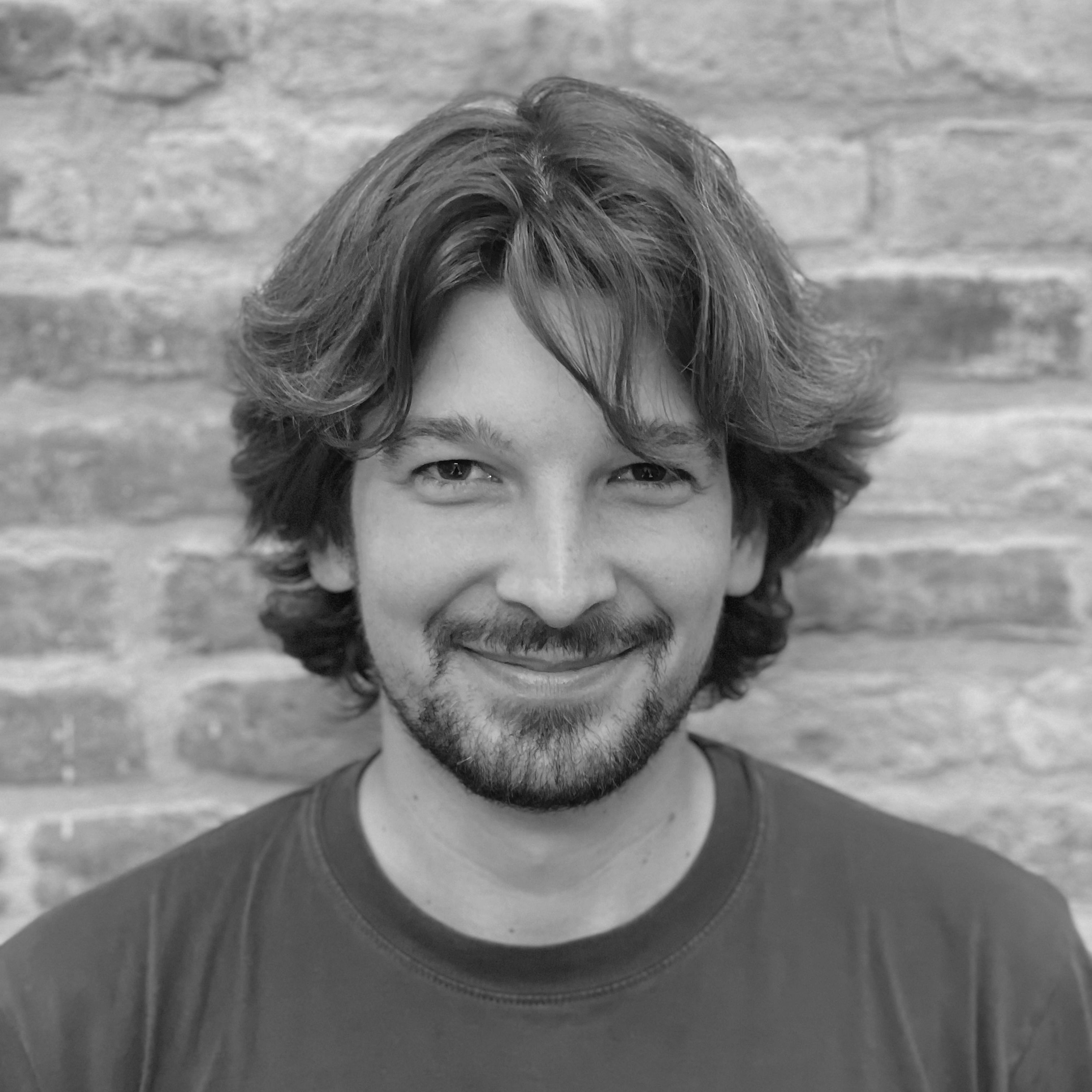
I am an applied Machine Learning researcher and AI engineer with 10 years of experience designing AI systems across audio, signal processing, multimodal data, and human perception. My work spans deep learning, real-time audio enhancement, representation learning, recommendation systems, Bayesian modelling, and neuroimaging applications. My background combines engineering, industry-facing ML consulting, and academic research at institutions including UCL, the School for Advanced Studies Lucca, and the Montreal Neurological Institute. I have worked across the full AI development lifecycle: problem definition, data preprocessing, feature extraction, model architecture, evaluation workflows, and deployment-oriented pipelines. I am particularly interested in translating advanced AI capabilities into practical, reliable, and product-relevant systems. My strength lies in connecting technical depth with structured thinking, helping teams identify feasible AI opportunities, design robust ML workflows, and communicate complex ideas clearly across technical and non-technical stakeholders.
Educational Background:
My academic path began with a Bachelor’s degree in Information Engineering at the University of Padua, followed by specialized training in Sound and Music Computing at Aalborg University, with industry collaborations and a visiting research period at the Music Technology Group in Barcelona. I later completed an MPhil at University College London, where I developed machine learning methods for urban soundscape prediction as part of the ERC-funded Soundscape Indices project.
Beyond technical pursuits, my scholarly motivation extends to ecological preservation and the confluence of engineering with artistic and humanistic domains.
Today, my work sits at the intersection of applied AI, human perception, audio technologies, and data-driven product innovation.
Contacts






News